
Small Batch / Customized Production
Vacuum Casting for Prototype Batches and Low-Volume Parts
Need a batch of matching parts for a design review, assembly check or defined test? Vacuum casting uses a master pattern and silicone mold to produce cast parts, commonly in polyurethane. Share your CAD, quantity, intended use and finish requirements so we can evaluate a suitable manufacturing approach.
Our silicone molding services can be customized to meet client needs, including specific color requirements during the molding process. We can also integrate other components into the mold (e.g., rubber over plastic or soft material over hard material) to enhance the product’s quality and feel.
Advantages of the Process
High Precision
Achieves fine surface detail, replicating the aesthetic quality of injection-molded parts.
Cost Efficiency
Compare the complete batch cost, including the master pattern, molds, material, quantity and finishing. Vacuum casting is not automatically faster or less expensive than CNC machining for every project.
Versatility
Supports a wide range of materials, colors, and surface finishes, catering to customer customization needs.
Swipe to view photos →

Soft Tooling Mold

Assembled Prototype
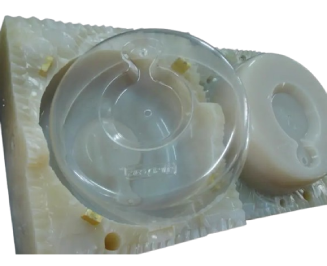
Silicone Mold
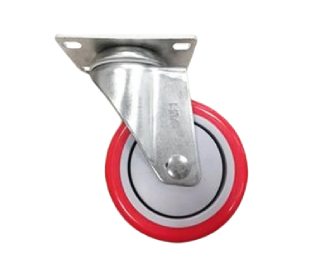
Overmolding product
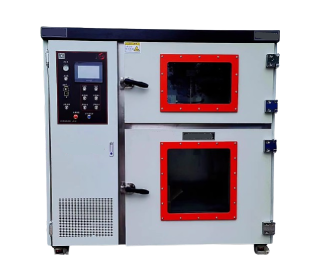
Vacuum Casting Machine
Compare processes by material, quantity, tooling cost and lead time.
View full process comparison · swipe table
| Soft Tooling (vacuum casting) | Reaction Injection Molding (Low pressure injection) | Rapid Tooling / Injection Molding (aluminum mold or soft steel mold + mass production injection) | |
|---|---|---|---|
| Mold material | RTV Silicone (Soft Mold) | Silicone, FRP/GRP, Aluminum Powder Epoxy Resin | Aluminum alloy/mild steel P20, S50C, NAK80, etc. |
| Mold cost (relative) | $ | $$ | Aluminum Mould $$$ / Steel Mould $$$$$ |
| Mold delivery time (general situation) | 3 – 7 working days | 5 – 15 working days | 15 – 35 working days |
| Single mode life | 15 – 25 pieces | 50 (Silicone) – 3,000 pcs (Aluminum Powder Epoxy Resin) | Aluminum moulds 10,000 – 20,000 pieces Steel moulds 100,000 – 500,000 pieces |
| Cavity pressure/ Clamping force | Vacuum → 0.05 MPa / Almost no clamping | 0.3 – 1 MPa / 5 – 30 ton | 70 – 200 MPa / 75 – 800 tons |
| Common materials for finished products | * PU (ABS‑like, PC‑like, transparent PMMA‑like) * High heat resistant PU (120 °C) * Elastomer PU / Silicone (Shore A 30‑90) * Conductive, flame retardant, filling grade special resin | * Solid or micro-foamed PU / PUA * Glass fiber reinforced PU (RRIM / SRIM) * DCPD, Nylon-RIM (Caprolactam) * Reactive EP, Polyester | * ABS, PC, PC/ABS, PP, PE, POM, PBT * PA6 / PA66 (including GF, CF) * PMMA, ASA, TPU/TPE and other thermoplastics |
| Cycle time/piece | 30 – 60 min | 2 – 5 min | 20 – 60 s |
| Recommended ordering batch | 8 items↑ | 50 items↑ | 5,000 pieces↑ (MOQ 5,000 pcs) |
| Common size range | ≤ 0.5 m | ≤ 2 m Large enclosures possible | ≤ 1 m; potentially limited by the clamping force of the injection molding machine |
| Possible wall thickness | 1 – 6 mm; uniform thickness is the most stable | 2 – 20 mm, thick and thin can be mixed | 0.8 – 4 mm; thickness difference requires flow channel balance |
| Dimensional accuracy | ±0.20 mm /100 mm | ±0.15 mm /100 mm | ±0.05 mm /100 mm |
| Surface quality | 0.1 mm texture can be copied; spray painting is required | Available in Class-A paint or leather texture | The mold surface can directly achieve mass production texture or high gloss |
| Typical advantages | Low mold opening fee, fast delivery, high flexibility | Low mold cost, large size, mixed thickness, impact resistance | Lowest unit cost, best precision, most materials and colors |
| Common Applications | Appearance/functional prototypes, samples, small batch internal components | Automobile bumpers, medical/industrial large panels, structural foam parts | Mass production of consumer goods, precision gears, fasteners, and large-volume structural parts |
What do your prototype parts need to demonstrate?

Appearance reviews
Include color references, textures and the surfaces that matter most. The master pattern, parting lines and finishing requirements influence the appearance of the finished parts.

Assembly checks
Identify mating components, holes and critical dimensions. Include the assembly drawing and acceptance criteria so shrinkage, fit and any secondary machining can be evaluated.

Defined functional tests
Specify loads, temperature, chemical exposure and test duration. Confirm the selected material grade and its suitability before using the parts to assess material-dependent performance.
Ready to discuss your parts?
Share your CAD files, material, quantity and delivery needs. Start an estimate or email us if your specifications are still taking shape.
Start a quote estimate Email your requirementsBlog and Knowledge Base

The Science of the Soft Mold: A Deep Dive into Why Vacuum Casting Tolerances Differ from CNC Machining
Read More →

Beyond the Sweet Spot: The Four Critical Boundaries of Vacuum Casting for Low-Volume Production
Read More →

Our Knowledge Base
Please refer here for more basic knowledge / detail / FAQ about this technique. →
Material selection for cast prototypes
ABS-like or PC-like polyurethane is not the same as the production thermoplastic. For material-dependent testing, specify the required grade, operating conditions and acceptance criteria.
 Soft and flexible part requirements
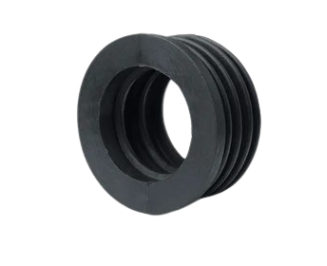
State the required hardness, flexibility, contact conditions and repeated-motion requirements. Confirm the available casting material and test criteria before treating it as equivalent to the intended production elastomer.
ABS-like polyurethane
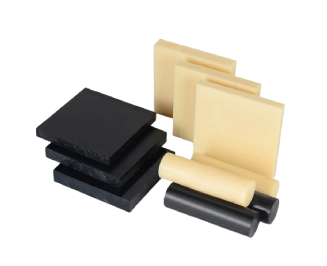
An ABS-like description indicates a comparison with selected properties or appearance; it does not mean the cast part uses injection-molding ABS. Review the actual resin grade and data sheet for your application.
PC-like and transparent appearance requirements
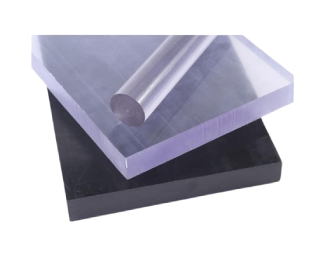
If appearance or transparency matters, include a reference and the required optical finish. A PC-like casting material does not automatically reproduce the thermal, impact or long-term performance of production polycarbonate.
Specified production materials
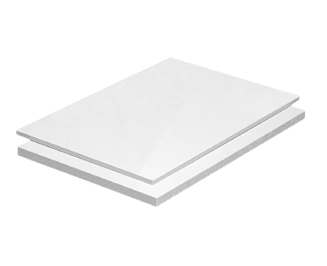
If testing requires PP or another specified thermoplastic, identify the exact grade and conditions. Confirm whether casting is appropriate or another manufacturing process is needed.
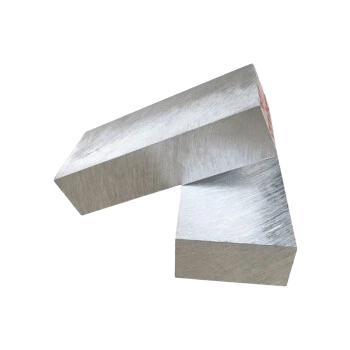
Applied Industries
IDMockup offers top-notch manufacturing capabilities, whether for rapid prototyping or custom production orders. Our self-owned factories and satellite factories are equipped to efficiently produce complex, high-quality parts.
 Electronics
 Batteries & Renewable Energy
 Medical Device
 Sports Equipment
 Industrial Automation & Robotics
 Internet & Communication
 Automotive
 Semiconductor
For more about our latest news, technology and equipment, please follow our official Facebook, X (Twitter) and official blog!
Ready to discuss your prototype batch?
Send your CAD revision, batch quantity, intended use, material and finish requirements. Not ready for an estimate? Email your requirements so we can discuss the information needed for a quotation.
Start a quote estimate Email your requirements